
Hello! I’m tashikent! I’m a Japanese baseball fan, and I’ve been rooting for NPB for 30 years!
When I first started following pro baseball, I was a Saitama Seibu Lions fan. But then I discovered Takayuki Mizushina-sensei’s manga, “Kon-Se de SHOW TIME” and “Sasaki-sama ni Negai wo.” I deeply connected with Mizushina-sensei’s love for the BayStars, which made me want to cheer for the Yokohama DeNA BayStars too, and that’s how I became a BayStars fan!
This blog was started to share the charm of the Yokohama DeNA BayStars: an earnest underdog team that never gets angry or violent, even when underestimated by fans of other teams, but simply dedicates itself wholeheartedly to baseball!
The Charm of the Yokohama DeNA BayStars as Underdogs
Their History of Overcoming Challenges
“What truly defines the Yokohama DeNA BayStars’ allure is their unwavering underdog spirit. Despite a history of prolonged struggles and persistent ridicule from rival teams, they’ve never surrendered, consistently rising to the challenge. This resilience isn’t limited to the team as a whole; individual players too have endured hardships and worked tirelessly to climb their way up.”
The Yokohama DeNA BayStars were founded in 1949 as the Taiyo Whales. The team then went through several name changes, becoming the Yokohama Taiyo Whales and then the Yokohama BayStars, before adopting their current name, the Yokohama DeNA BayStars, in 2012.
The Taiyo Whales, embroiled in a merger dispute with the Shochiku Robins, were a consistently weak team throughout the 1950s, often finishing at the bottom of the league. However, in 1960, under the brilliant leadership of manager Osamu Mihara—whose strategic genius became known as “Mihara Magic”—they achieved their first-ever league championship and Japan Series title.
After that historic win, the team endured many years as an underdog once again. However, in 1998, boasting the legendary “Machine Gun Batting Lineup”—a powerful offense still talked about today—they achieved their first league championship and Japan Series title in 38 years.
Following that, the team suffered a decline due to various issues, including ownership changes, which weakened them considerably. They eventually fell to a state where they were constantly mocked by other teams, almost like a laughingstock. Then, in 2012, the team’s name officially changed to the current Yokohama DeNA BayStars.
From there, they steadily built up their strength. In 2017, they broke through the Central League Climax Series to advance to the Japan Series. In 2023, they secured their first interleague championship. And in 2024, they not only won the Climax Series but also conquered the Japan Series, claiming their first NPB championship title in 26 years!
This history of long struggles and hardships, combined with their unwavering spirit in the face of constant taunts from other teams, is the greatest charm of the Yokohama DeNA BayStars as an underdog. They never surrender, but always rise to the challenge.
“What truly defines the Yokohama DeNA BayStars’ allure is their unwavering underdog spirit. Despite a history of prolonged struggles and persistent ridicule from rival teams, they’ve never surrendered, consistently rising to the challenge. This resilience isn’t limited to the team as a whole; individual players too have endured hardships and worked tirelessly to climb their way up.”
Players Who Rose from Obscurity
Not just the team, but the players themselves have also endured hardships and worked tirelessly to rise through the ranks.
Take for example, veteran player Toshio Miyazaki. He joined the Yokohama DeNA BayStars in 2013 and once made a massive error that was uncharacteristic of a professional baseball player, causing him to lose trust.However, from the very next year after that major mistake, his opportunities to play steadily increased, and he has continued to be a spiritual pillar for the team right up to the present day in 2025.
Then there’s Shugo Maki, the team’s bright mood-maker and face of the franchise. He joined the Yokohama DeNA BayStars in 2021 and is a rare “hitting second baseman” in NPB, boasting high batting power despite the physically demanding nature of playing second base. His “Destasha” performance after hitting a home run is a famous celebration well-known even to fans of other teams.
And truly, one cannot discuss the BayStars without acknowledging their devoted fans. No matter how much they are ridiculed by supporters of other teams, they never waver, consistently cheering on.These fans embody Japan’s unique ‘underdog cheering culture,’ a spirit often undervalued in this country.
The Unique BayStars Fan Culture
“Among the BayStars’ unique cheering culture initiatives, a standout example is their team anthem. While most other NPB teams have used versions recorded by professional singers for many years, the BayStars have their players re-record the anthem annually, using that version for the entire season.
In addition to “Atsuki Hoshitachi yo” (Oh, Hot Stars), a new team song titled “ALL BAYSTARS” also debuted in 2025.
The BayStars also undertake numerous unique initiatives during games, never failing in their efforts to entertain spectators not just with baseball, but also as a full entertainment experience.
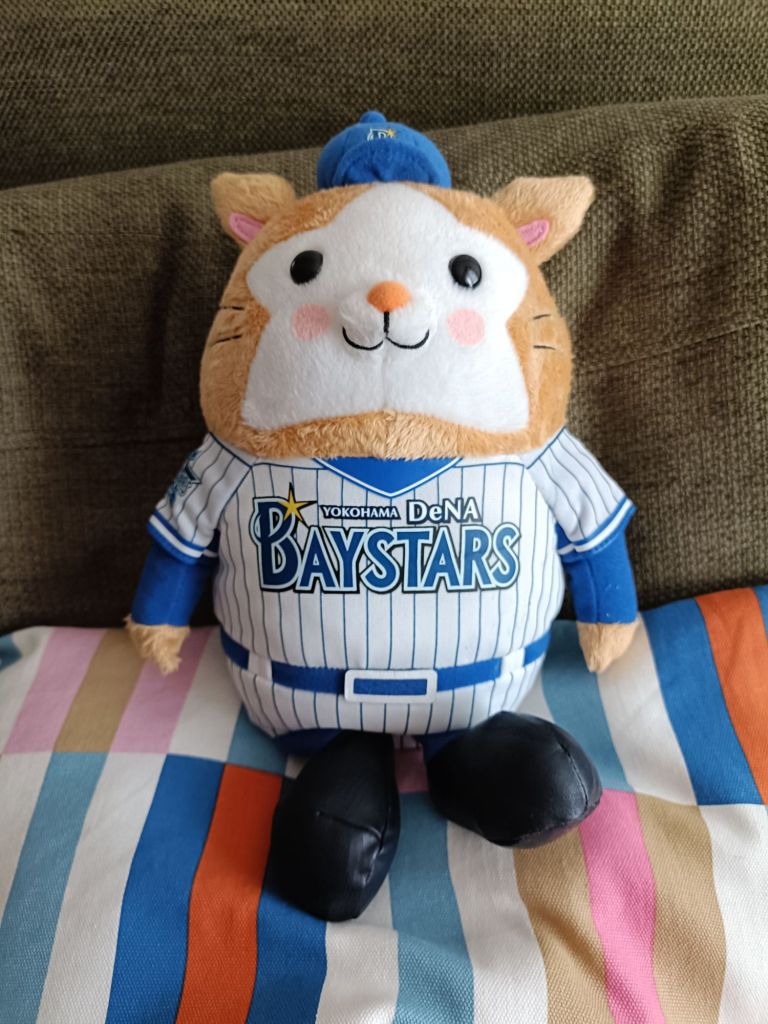
What’s more, Yokohama Stadium has become a gathering spot for cats, and occasionally, a cat will run onto the field during a game, causing a temporary stop in play. While certainly a happening, these “cat invasions” have become a notable feature of Hamasta.
The BayStars once struggled so much that even Yokohama citizens sometimes branded them “the shame of Yokohama.” However, through their consistent, grassroots community involvement, fan events, and local baseball clinics, the team has gradually earned the trust of the city. Today, Yokohama Stadium on game days is like a festival, and the BayStars have become a vibrant part of Yokohama City’s unique energy.
As I mentioned earlier, the BayStars are by no means a powerhouse team. In fact, fans often go home having watched a loss. Yet, the dedicated fans aren’t solely focused on wins and losses; even after a defeat, they possess a positive outlook, thinking, “I’ll come back to cheer again.” And then, when the team occasionally achieves remarkable results, like their 2024 Japan Series championship, the emotional investment from the gathered fans is simply incredible. This profound connection likely stems from the BayStars’ unwavering commitment to fair play and integrity, despite years of struggle and contempt. It allows fans to feel immense pride in supporting a team that, while not always strong, consistently plays with honor and integrity.
Finally.
I dislike glorifying powerhouse teams—what’s often called “jumping on the bandwagon.” Instead, my nature is to cheer for the “underdogs,” those teams that are weaker or at a disadvantage.
From its days as the Taiyo Whales, the BayStars have always been a more moderate team, known for not being aggressive or prone to outbursts. In the past, they were often ridiculed for lacking “fighting spirit” and being “weak-kneed.”
However, even when threatened or put at a disadvantage, the BayStars have never abandoned their non-violent stance, consistently approaching baseball with integrity. For me, as someone who wants to support diligent and earnest individuals, the BayStars’ unwavering commitment to the game struck me as truly remarkable.
For me, the Yokohama DeNA BayStars overcoming hardships to achieve victory is infinitely more precious and moving than a powerhouse team simply winning as expected.
The sheer brilliance of cheering for an “underdog”—a feeling you could never experience by supporting a powerhouse team—is my greatest motivation and joy in rooting for the Yokohama DeNA BayStars, a team that often struggles to find rewarddespite all its efforts.
It would be my greatest joy if you’d join me in cheering for this incredible team. When that time comes, let’s get fired up together!
 Blog of a secret DeNA fan.
コメントを残す